The Transformation of Smart Irrigation as a Key Pillar of "Smart and Sustainable Farming" in the Era of Climate Change
2026-08-19 16:10:54 by Scientific Writer
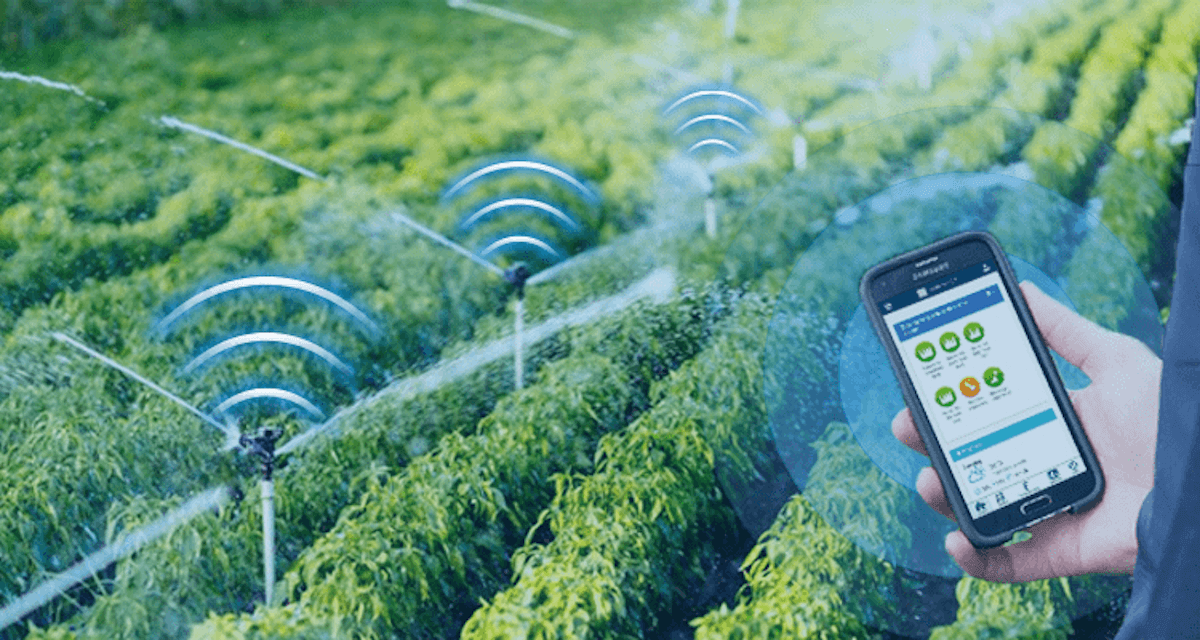
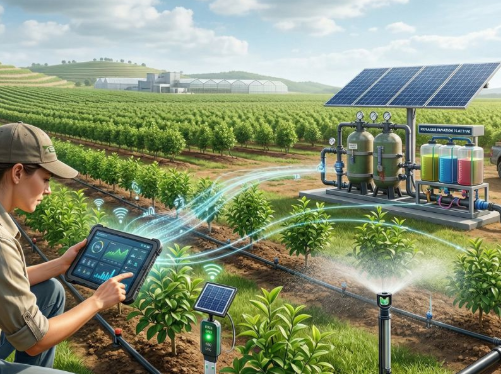
Figure 1. Sustainable smart irrigation system overview [1]
The water crisis has become one of the most serious global problems driven by climate change, population growth, and rising food demand. According to the Food and Agriculture Organization (FAO), agriculture consumes most global water resources, making inefficient management worsen scarcity [2]. In Indonesia, the water crisis is also beginning to be felt through shifting rainfall patterns, longer dry seasons, and declining water availability for agricultural irrigation. These conditions have led to reduced agricultural productivity and increased risk of crop failure in several regions. Therefore, more efficient and sustainable irrigation system innovations are needed to maintain food security while reducing the wasteful use of water resources.
Irrigation systems have undergone significant development, evolving from conventional methods reliant on manual management toward smart irrigation systems based on digital technology. This shift is driven by climate change, limited water resources, and the need to improve agricultural productivity. Smart irrigation refers to an irrigation system that utilizes digital technology to optimize water use in accordance with crop needs and environmental conditions. Through a more precise approach, water distribution can be carried out efficiently, reducing resource waste while supporting agricultural productivity [3]. Therefore, the transformation toward smart irrigation represents an important step in realizing more adaptive and sustainable agriculture in the era of climate change.
The implementation of smart irrigation is supported by various technologies, including the Internet of Things (IoT), artificial intelligence (AI), automated sensors, cloud computing, and others [4]. Sensors connected through IoT function to collect real-time data on soil moisture, ambient temperature, rainfall, and crop conditions. This data is then analyzed using AI to determine the most appropriate irrigation needs based on land conditions and weather predictions. Subsequently, information and analytical results can be stored and processed using cloud computing, making them easily accessible to farmers from various locations [5]. The integration of these technologies enables irrigation systems to operate more automatically, accurately, and responsively to changing environmental conditions.
Daftar Pustaka
[1] Agricult Outlook, "How microirrigation systems, automation, and data are reshaping agriculture for a sustainable future," Agricult Outlook, Mar. 25, 2026. [Online]. Available:https://agricultoutlook.com/smart-irrigation-is-transforming-farming-and-saving-water/
[2] Food and Agriculture Organization (FAO), The State of Food and Agriculture 2020 – Overcoming Water Challenges in Agriculture. Rome: FAO, 2020. doi: 10.4060/cb1447en.
[3] A. I. P. Mendrofa, "Inovasi teknologi pengelolaan tanah dan air untuk meningkatkan produktivitas lahan," Jurnal Proteksi Tanaman Tropika, vol. 8, no. 2, pp. 1197–1210, 2025. doi: 10.20527/jptt.v8i2.3233.
[4] L. Anggraini, M. L. Z. Maharani, H. Sonadinata, S. Z. Zulfari, and Y. Budiawati, "Literature Review: Analisis Implementasi IoT pada Sistem Irigasi Cerdas untuk Efisiensi Penggunaan Air," Integrative Perspectives of Social and Science Journal, vol. 2, no. 3, pp. 3601–3611, Jun. 2025. https://ipssj.com/index.php/ojs/article/view/471.
[5] U. T. Suryadi, F. Dwiana, A. Z. Z. Abidin, Y. Murdianingsih, M. Faizal, C. Carkiman, and A. Muhajir, "Sistem irigasi cerdas terintegrasi AI berbasis IoT untuk pertanian modern menggunakan algoritma C4.5 di Desa XYZ," Jurnal Teknologi Informasi dan Komunikasi, vol. 19, no. 1, pp. 57–68, 2026. doi: 10.47561/jtik.v19i1.385.
Author, Michelle Oskeviola, Navisha Haniy, Yan Karina Agatha, Raul Jiyan Firmansyah
Recent Posts

From Peel to Power: Optimizing DSSCs with Betacyanin Extract
2026-08-24 20:19:00