SCADA for Smart Grid Optimization Using Artificial Intelligence
2026-08-19 16:58:07 by Scientific Writer
The transition toward smart grid infrastructure has fundamentally changed how electric utilities monitor, control, and optimize power delivery. As renewable energy sources such as solar and wind are integrated in increasing quantities, grid operators face rising complexity from variable generation, distributed assets, and fluctuating demand. Supervisory Control and Data Acquisition (SCADA) systems have long served as the operational backbone for real-time grid monitoring and control [1], [2]. Their capabilities are now increasingly being extended through artificial intelligence (AI) to support faster, more adaptive, and more autonomous decision-making.
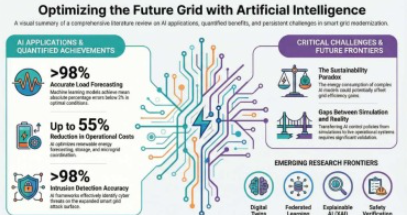
Fig. 1. Optimizing the future grid with artificial intelligence [5]
A conventional Supervisory Control and Data Acquisition system consists of field-level hardware such as Remote Terminal Units (RTUs) and Programmable Logic Controllers (PLCs), which collect measurements from substations, transformers, and switchgear [3]. These measurements are relayed through communication protocols such as DNP3 or IEC 61850 to a central master station and human-machine interface (HMI) [3]. This architecture enables real-time visibility, fault detection, and remote control across transmission and distribution networks, and has become a key enabler of demand response, distribution automation, and renewable energy integration [4]. As illustrated in Fig. 1, these layers form the foundation on which higher-level analytics and control functions are subsequently built.
The integration of Artificial Intelligence into this architecture adds an analytical layer on top of conventional supervisory functions. Machine learning models are increasingly applied to load and generation forecasting, with recent large-scale reviews reporting forecasting errors below two percent under favorable conditions when using architectures such as convolutional and recurrent neural networks [5]. Reinforcement learning and other adaptive control techniques are also being explored to support real-time grid balancing, voltage regulation, and self-healing responses to faults [6], [7]. These techniques move analytics and control beyond the rule-based logic that has traditionally governed SCADA operations.
Several benefits follow from this AI-SCADA integration. Predictive analytics built on SCADA telemetry can flag equipment degradation before failure occurs, supporting condition-based maintenance rather than fixed schedules, while AI-assisted anomaly detection can improve resilience against both physical disturbances and cyberattacks, with some intrusion-detection frameworks reportedly achieving accuracy above ninety-eight percent in controlled evaluations [5]. AI-based optimization can also help balance the variability introduced by distributed renewable generation, improving overall grid stability and reducing curtailment [6]. Collectively, these capabilities allow SCADA-based systems to shift from reactive monitoring toward proactive, data-driven grid management.
Despite this potential, integrating AI with SCADA introduces new operational and technical challenges. Expanding the number of connected sensors, edge devices, and AI models widens the cyber-attack surface of what is already considered critical infrastructure, requiring layered defenses such as network segmentation, secure protocols, and continuous vulnerability assessment [3], [8]. Real-time control decisions also demand low-latency computation, which can be difficult to guarantee when AI inference is centralized rather than distributed to the network edge. Furthermore, the effectiveness of AI models depends heavily on the quality and completeness of historical SCADA data, and gaps in labeling, sensor calibration, or communication reliability can degrade model performance in ways that are not always visible until a fault occurs.
Looking forward, the convergence of SCADA and AI is expected to deepen through edge computing, digital twin simulations, and standardized data models that allow AI systems to interoperate across vendors and utilities. Realizing this potential will require not only algorithmic advances but also governance frameworks that keep human operators accountable for automated decisions, particularly in safety-critical control actions. Pilot deployments and longer-term field evaluations will be essential to validate performance claims from laboratory studies before AI-driven SCADA optimization is adopted at scale. With these steps, SCADA-AI integration can move from isolated pilot projects toward a standard component of resilient, sustainable transmission and distribution networks.
References
[1] T. A. Rajaperumal and C. C. Columbus, "Transforming the electrical grid: The role of AI in advancing smart, sustainable, and secure energy systems," Energy Informatics, vol. 8, Art. no. 51, 2025, https://doi.org/10.1186/s42162-024-00461-w
[2] M. Ahmadi, H. Aly, and J. Gu, "A comprehensive review of AI-driven approaches for smart grid stability and reliability," Renewable and Sustainable Energy Reviews, vol. 226, no. Part D, Art. no. 116424, 2026, https://doi.org/10.1016/j.rser.2025.116424
[3] Electricity Forum, "What is SCADA? Utility grid control, monitoring, automation," 2025. https://electricityforum.com/td/smart-grid/what-is-scada
[4] Electricity Forum, "Smart grid monitoring: SCADA, sensors, predictive analytics," 2025. https://electricityforum.com/td/smart-grid/smart-grid-monitoring
[5] B. Gülmez, "Artificial intelligence-driven smart grid optimization: A comprehensive review of machine learning, renewable integration, and cybersecurity applications," Energy Conversion and Management: X, vol. 30, Art. no. 101849, 2026, https://doi.org/10.1016/j.ecmx.2026.101849
[6] S. Aslam, A. Altaweel, and A. Bou Nassif, "Optimization algorithms in smart grids: A systematic literature review," arXiv, Jan. 2023, https://doi.org/10.48550/arXiv.2301.07512
[7] A. Gazis, S. Pappas, T. Vavouras, G. Kiokes, and V. Vita, "A comprehensive review of AI-based co-optimization of smart energy grids, 5G virtualization, edge analytics, and military-resilient critical infrastructure: A multi-domain review," Electronics, vol. 15, no. 11, Art. no. 2411, 2026, https://doi.org/10.3390/electronics15112411
[8] Electricity Forum, "SCADA architecture in grid control systems," 2026, https://electricityforum.com/td/smart-grid/scada-architecture
Author, Regina Caroline Lamanusu
Recent Posts

From Peel to Power: Optimizing DSSCs with Betacyanin Extract
2026-08-24 20:19:00