Indonesia’s Electricity Oversupply: How IPP Renegotiation and Renewable Integration Enable a Sustainable and Equitable Energy Transition
2026-04-29 11:15:59 by Scientific Writer
Global energy demand continues to rise as developing nations pursue accelerated industrial and economic growth. Indonesia, as the world's fourth most populous country, relies heavily on conventional fossil fuels for electricity needs. Coal remains a dominant energy source, and the national electricity system has shifted from deficit to oversupply condition. This paradox raises critical questions about national energy planning and long-term sustainability [5]. Addressing this structural imbalance becomes increasingly urgent as Indonesia pursues its clean energy transition goals.
Electricity oversupply occurs when installed generation capacity significantly exceeds actual electricity demand within the national power system [5]. Indonesia's state-owned company, Perusahaan Listrik Negara (PLN), operates as the sole electricity distributor across the entire archipelago. The government launched a 35,000 MW power plant program to aggressively expand national generation capacity [3]. However, actual electricity demand grew far more slowly than optimistic projections that originally justified this massive infrastructure program. Consequently, resolving this structural gap between supply and demand becomes an increasingly critical national energy policy priority.
The projected consumption growth was pegged at 7–8% per year, far above the actual realization of only 4–5%. The take-or-pay scheme in power purchase agreements results in significant financial strain for PLN [2]. Around 80% of current excess supply comes from private Independent Power Producer plants with rigid long-term contracts [5]. PLN's electricity oversupply persisted for at least ten years, with 2023 recording approximately 6.1 thousand GWh of surplus electricity [5]. This sustained imbalance has placed enormous financial pressure on PLN's operational budget and long-term economic stability.
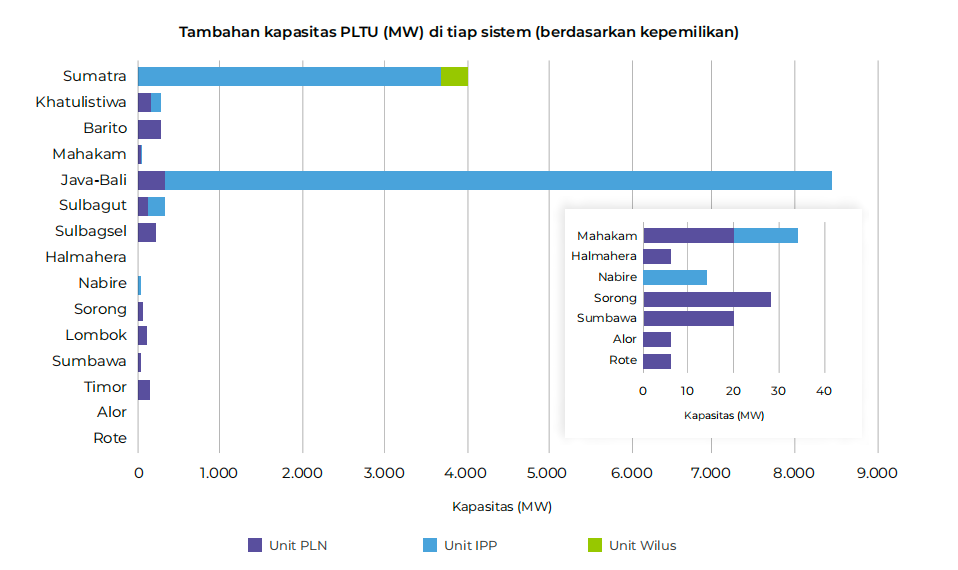 Figure 1. additional PLTU capacity in each system [3]
The geographical distribution of oversupply reveals a deeper structural inequality within Indonesia's energy system. Excess electricity concentrates in Sumatra and Java, absorbing more than 90% of national electricity consumption [3]. Eastern regions like Nusa Tenggara Timur (NTT), Nusa Tenggara Barat (NTB), and Papua still suffer from inadequate and unreliable electricity supply [6]. Only 13% of PLN's generation comes from renewables, while 60% derives from coal-fired power plants [1]. This structural coal dependence not only deepens the oversupply crisis but actively obstructs Indonesia's national energy transition commitments.
Resolving this electricity oversupply requires coordinated policy interventions involving multiple institutional stakeholders across the energy sector. Proposed solutions include new market niches, electric vehicle incentives, electric stove adoption, and industrial electrification programs. Smart grid technologies and energy monitoring systems can further optimize electricity distribution across regions with varying demand [4]. Integrating large-scale renewable energy alongside renegotiating inflexible Independent Power Producer (IPP) contracts offers a transformative pathway forward. With strategic policy reforms, Indo nesia's electricity surplus can become a foundation for a cleaner and more equitable national energy future.
References
[1] Apriliyanti, I. D., Nugraha, D. B., Kristiansen, S., & Overland, I. (2024). To reform or not reform? Competing energy transition perspectives on Indonesia's monopoly electricity supplier Perusahaan Listrik Negara (PLN). Energy Research & Social Science, 118, 103797. https://doi.org/10.1016/j.erss.2024.103797
[2] Hartanti, S., & Wibisono, M. A. (2024). Perencanaan model bisnis pada upaya konversi bus listrik Trans Jogja. Jinggo: Jurnal Inovasi Teknologi Manufaktur, Energi, dan Otomotif, 3(1), 34–50.
[3] Institute for Essential Services Reform. (2023). Delivering Indonesia’s power sector transition: Costs, benefits, and implications of intervening the 13.8 GW coal-fired power plants project pipeline of Indonesia’s state-owned utility.
[4] Prastika, A. (2023). Hubungan antara tingkat konsumsi energi listrik dengan pertumbuhan ekonomi di Indonesia. Jurnal Ilmu Ekonomi, 7(1), 18–29.
[5] Redaputri, A. P. (2023). The condition of electricity oversupply in Indonesia. Journal of Earth Energy Engineering.
[6] Supriadi, S., & Sudiarto, B. (2023). Analisis harga pembelian tenaga listrik yang optimal untuk pembangkit listrik energi terbarukan di kawasan timur Indonesia. Jurnal Energi Baru dan Terbarukan.
Author, Faiza Thufaildiza Salsabil
Recent Posts

From Peel to Power: Optimizing DSSCs with Betacyanin Extract
2026-08-24 20:19:00