Exploring Edge AI in IoT: Transforming Local Intelligence and System Performance
2026-04-06 18:00:39 by Scientific Writer
Penulis : ‘Akiqotus Syahriyah_Internet of Things
16 March 2026
The Rise of Edge AI in Modern IoT Systems
The rapid growth of Internet of Things (IoT) devices has changed how systems generate and process data. Devices like sensors, cameras, smartphones and connected machines continuously produce large amounts of data at the network edge. Traditionally, systems send this data to centralized cloud servers for processing and analysis. However, strong reliance on cloud computing can increase latency and network congestion, especially in applications that require real-time responses [1].
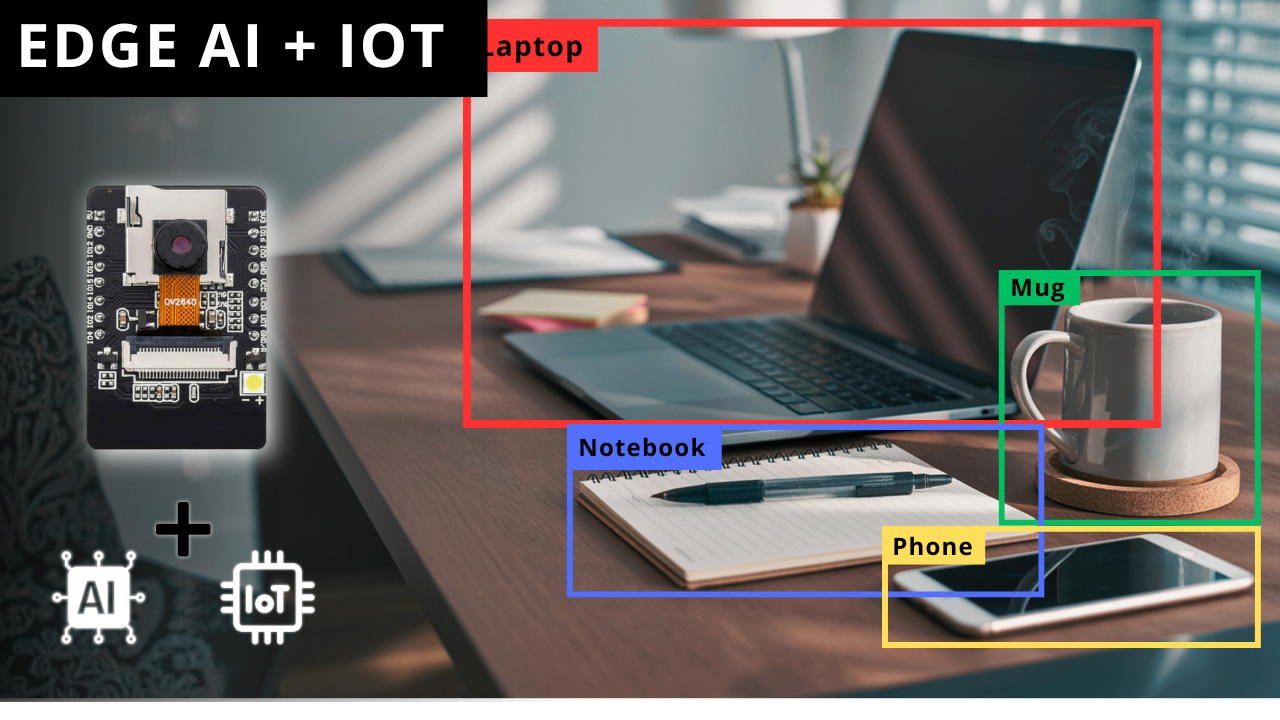
Edge Artificial Intelligence (Edge AI) addresses this challenge by enabling machine learning models to run directly on local devices. Edge devices analyze data locally instead of sending all raw data to remote servers [2]. This approach reduces communication delays and allows systems to operate even when internet connectivity becomes unstable. As a result, many industries apply Edge AI in applications such as autonomous vehicles, healthcare monitoring, and smart manufacturing [2].
Architectures and Tools Supporting Edge Intelligence
Modern Internet of Things (IoT) systems use several architectures to support decentralized intelligence. Federated Learning allows multiple devices to train models collaboratively without sharing raw data [2]. This method improves privacy while enabling distributed model development. Some systems also organize devices using hierarchical architectures, where nodes handle tasks based on their computational capabilities.
In addition, client–server coordination allows centralized servers to manage model updates while edge devices perform real-time inference. Developers rely on specialized frameworks to deploy machine learning models on resource-constrained hardware. Tools such as TensorFlow Lite, PyTorch Mobile, TinyML, OpenVINO, and ONNX help optimize models for edge devices [2]. These frameworks support techniques such as model quantization and hardware acceleration to improve inference performance.
Improving Efficiency and Future IoT Systems

Source : freepik.com
Processing data near its source improves the efficiency of IoT networks. Edge architectures can reduce network latency by up to 50% compared to cloud-only systems [4]. Efficient task scheduling can also reduce computational workload by around 40% in some IoT deployments [3]. Local processing also reduces bandwidth consumption in large IoT infrastructures. This approach lowers operational costs and improves system reliability. Edge devices continue operating even without stable internet connections.
Many modern systems combine edge computing with cloud infrastructure. The cloud handles large-scale storage and intensive model training tasks [1]. Edge devices focus on real-time analysis and local decision-making [2]. This hybrid architecture balances performance, efficiency, and scalability in modern IoT ecosystems [5]. This strategic integration optimizes resource allocation by utilizing the strengths of both computing paradigms.
References
[1] IBM, “Edge AI,” Ibm.com, Aug. 25, 2023. https://www.ibm.com/think/topics/edge-ai
[2] V. Shankar, “Edge AI: A Comprehensive Survey of Technologies, Applications, and Challenges,” in 2024 1st International Conference on Advanced Computing and Emerging Technologies (ACET), IEEE (Institute of Electrical and Electronics Engineers), Aug. 2024, pp. 1–6. doi: https://doi.org/10.1109/acet61898.2024.10730112.
[3] A. Gunawan and I. Komputer, “PENERAPAN EDGE COMPUTING UNTUK MENINGKATKAN EFISIENSI JARINGAN DALAM LINGKUNGAN IOT INDUSTRI,” Logicloom.id, vol. 1, no. 8, p. 2024, Oct. 2024.
[4] V. N. Pamadi and P. Singh, “Edge AI vs Cloud AI: A Comparative Study of Performance Latency and Scalability,” International Journal of Research in Modern Engineering & Emerging Technology, vol. 13, no. 3, pp. 13–35, Mar. 2025, doi: https://doi.org/10.63345/ijrmeet.org.v13.i3.2.
[5] G. Vennira Selvi and V. S. Kumari, “Edge AI: Transforming Real-Time Decision-Making in the Internet of Energy,” in Artificial Intelligence (AI) for IT Energy Efficiency and Green AI for Environment Sustainability, Springer, 2026, pp. 539–564. doi: https://doi.org/10.1007/978-3-031-89420-6_26.
Author, ‘Akiqotus Syahriyah
Recent Posts

From Peel to Power: Optimizing DSSCs with Betacyanin Extract
2026-08-24 20:19:00