Evolution of Perovskite Solar Cells: The Next Generation of Solar Power
2026-04-10 23:08:55 by Scientific Writer
Penulis: Raymond Gerrard_Renewable Energy
Tanggal: 7 April 2026
The Emergence of Lead-Free Perovskite Materials
Perovskite solar cells emerge as a dominant alternative to traditional silicon panels. Based on research conducted by Kojima et al (2009) these devices demonstrate remarkable power conversion efficiencies that compete with existing technologies. Efficiency records jumped from 3.8% in 2009 to over 25% today [4]. This extraordinary growth highlights the potential of perovskite materials for future power grids. Modern researchers actively explore these compounds to revolutionize the global energy market.
However, this impressive growth often creates significant concerns regarding the toxicity of specific chemical components. Most current high-performance perovskite cells still contain toxic lead-based compounds [1]. This dangerous chemical component poses significant risks to human health and local ecosystems. Environmental sustainability requires researchers to find safer alternatives for mass consumer production. Developing non-toxic materials therefore becomes a critical priority for future solar panels.
Modeling and Optimizing Sustainable Solar Architectures
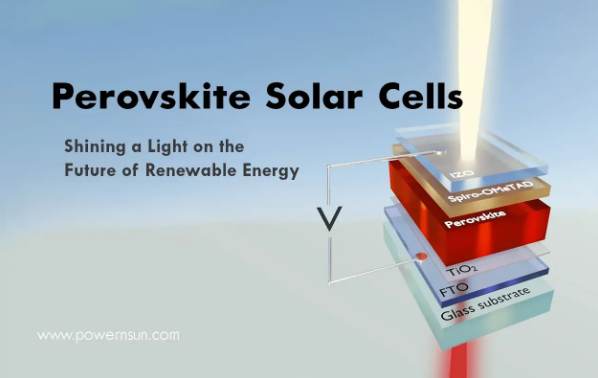
source: powernsun.com
Lead-free Cs2AgBiI6 provides a promising path for the next generation of solar panels [1]. Based on research conducted by McClure et al (2016) this specific compound effectively replaces toxic lead with safer silver and bismuth atoms. These new devices offer better durability against environmental factors like light and heat. Scientific simulations explore how different layers impact the functional output of these cells [5]. This innovation significantly contributes to the worldwide transition toward clean energy systems.
Such innovative compositions require careful structural adjustments to maximize their operational potential. Thicker layers capture more sunlight to generate higher electric currents for users. However, excessive thickness can trigger energy losses that diminish the total power conversion [1]. Researchers use advanced software tools like SCAPS-1D to identify the most effective dimensions [1]. Finding the perfect balance between thickness and absorption determines the ultimate success of solar devices.
Driving Efficiency for a Greener Energy Future
Simulations currently produce power conversion efficiencies near twenty percent for these devices [1]. Latest tests recorded a short-circuit current density of 24.98 mA/cm2 for the cells. These next-generation panels maintain stable operations under various environmental conditions. Improving these values remains vital for the commercial success of new photovoltaics. High efficiency results eventually build a strong foundation for the global shift toward sustainable power solutions.
Superior performance combined with non-toxic materials creates a viable path for global mass adoption. These eco-friendly panels reduce hazardous waste while utilizing readily available natural materials [1]. Enhanced recyclability makes these devices more attractive for long-term urban sustainability projects. Industry leaders monitor these developments to replace older and less efficient solar systems. Global energy transitions eventually rely on the successful integration of these non-toxic photovoltaic technologies.
References
[1] M. Shirazi, “Lead-Free Cs2AgBiI6 Perovskite Solar Cells for Eco-Friendly Energy Solutions: A Thickness-Dependent Performance Analysis,” in Proc. 2024 14th Smart Grid Conference (SGC), IEEE, 2024, doi: 10.1109/SGC64640.2024.10982730.
[2] A. Kojima, K. Teshima, Y. Shirai, and T. Miyasaka, “Organometal Halide Perovskites as Visible-Light Sensitizers for Photovoltaic Cells,” J. Am. Chem. Soc., vol. 131, no. 17, pp. 6050–6051, 2009.
[3] E. T. McClure, M. R. Ball, W. Windl, and P. M. Woodward, “ Cs2AgBiI6 (X= Br, Cl): New Visible Light Absorbing, Lead-Free Halide Perovskite Semiconductors,” Chem. Mater., vol. 28, no. 5, pp. 1348–1354, 2016.
[4] NREL, “Best Research-Cell Efficiency Chart,” [Online]. Available: https://www.nrel.gov/pv/cell-efficiency.html. [Accessed: March 2026].
[5] M. K. Hossain et al., “Combined DFT, SCAPS-1D, and wxAMPS frameworks for design optimization of efficient Cs2AgBiI6 based perovskite solar cells,” RSC Adv., vol. 12, no. 54, pp. 34850–34873, 2022.
Author, Raymond Gerrard
Recent Posts
From Peel to Power: Optimizing DSSCs with Betacyanin Extract
2026-08-24 20:19:00